The Bridge Between Two Worlds: Industrial Transformation, ESG and the Future of BRICS–Europe Cooperation
Exclusive interview with B2BRICS Magazine featuring Kjeld Friis Munkholm on industrial transformation, ESG, circular economy, standards, supply chains, and the prospects for cooperation between Europe, China, and BRICS countries until 2030.
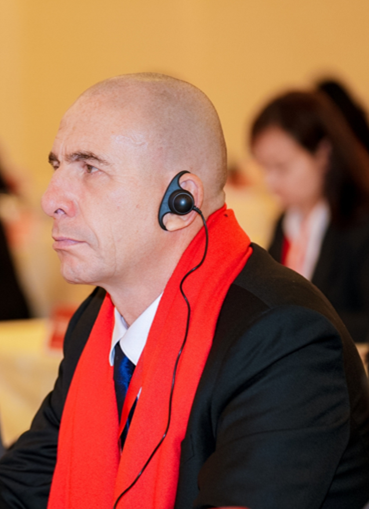
EXPERT PROFILE
Kjeld Friis Munkholm (孟可和)
Owner & CEO | EUCPTID Committee Member for China and Denmark
Organization: Munkholm & Zhang Consulting Shanghai
Location: Shanghai, China / Denmark
KEY TAKEAWAYS
- By 2030, market access will be determined by governance quality, standards, and ESG compliance.
- Europe needs to move from pure cost reduction to building resilient industrial ecosystems in cooperation with China.
- Water and waste management are moving from operational routines to factors of strategic competitiveness.
SECTION 1: Industrial Transformation — Europe & China
Question 1: Based on your 26+ years of experience and current role with EUCPTID, what are the top 3 trends reshaping industrial cooperation between Europe and China right now? Which of these trends will have the most lasting impact by 2030?
I see three major trends reshaping industrial cooperation between Europe and China.
First, cooperation is becoming more selective and strategic. The previous model of broad, low-friction globalization is giving way to targeted cooperation in areas where both sides see real value, such as advanced manufacturing, energy transition, industrial efficiency, health technologies, and circular economy solutions. This means companies must be much clearer about where they want to collaborate and where they need to protect core capabilities.
Second, industrial cooperation is increasingly being shaped by regulation, standards, and compliance. Carbon reporting, supply chain due diligence, traceability, cyber requirements, product certification, and local content considerations are now part of commercial reality. In many cases, standards and compliance now shape market access as much as product quality or price.
Third, resilience has become as important as cost. Boards are no longer looking only at cheapest sourcing. They are looking at continuity, geopolitical exposure, critical inputs, logistics reliability, after-sales capability, and the ability to adapt to policy shifts. That changes how Europe and China work together. The focus is moving from pure cost arbitrage to resilient industrial ecosystems.
By 2030, the most lasting trend will be the second one: regulation and standards becoming core drivers of industrial cooperation. Whoever understands and manages compliance, traceability, ESG expectations, and cross-border operating rules will be in the strongest position. In the years ahead, market access will increasingly depend on governance quality, not only on manufacturing capability.
Question 2: China recently announced its "Industries of the Future" initiative, prioritizing AI, biotech, clean energy, and quantum computing. How should European manufacturers and industrial companies respond strategically? Should they compete, collaborate, or protect their technologies?
European companies should not respond with a one-word strategy. They need a portfolio strategy.
In some areas, they should compete. That is especially true where Europe has strong capabilities in advanced engineering, specialist machinery, industrial software, process know-how, safety systems, quality assurance, and high-value components.
In other areas, they should collaborate. China offers scale, speed, manufacturing depth, and increasingly strong applied engineering. In fields such as industrial decarbonization, energy storage deployment, water treatment, process automation, and smart manufacturing, the best results may come from combining European systems expertise with Chinese execution capacity.
And in selected areas, they must protect. Core IP, algorithms, sensitive design architecture, frontier research, and strategic process knowledge should be ring-fenced. European firms need a much more disciplined model for deciding what can be localized, what can be licensed, what can be co-developed, and what must remain controlled.
So my view is clear: Europe should compete where it must, collaborate where it creates real value, and protect where strategic control matters. The companies that will do best are those that move away from emotional reactions and instead adopt a segmented, board-approved China strategy.
Question 3: You work closely with UNIDO ITPO Shanghai on technology transfer and industrial pilots. Can you share one concrete example of a successful Europe–China industrial project that demonstrates how cross-border collaboration can work in practice? What made it successful?
Because many of the most meaningful industrial projects involve confidentiality, I would rather describe the pattern of a successful case than overstate one named example.
A strong Europe–China pilot typically works when a European technology provider brings a clear technical advantage, for example in resource efficiency, process control, waste valorization, industrial water treatment, or specialized equipment, while the Chinese side brings industrial scale, implementation speed, local engineering adaptation, and supply chain depth.
What makes such a project successful is usually not the technology alone. It is the structure around it. The successful cases tend to have five elements in place:
- A clearly defined commercial use case, not just a technical demonstration.
- Local partners with decision-making authority and operational commitment.
- Clear IP boundaries from the beginning.
- Measurable KPIs, such as energy saved, waste reduced, uptime improved, or cost per unit lowered.
- A path from pilot to replication, so the project can scale beyond one site.
In my experience, cross-border industrial cooperation works best when both sides are solving a real operational problem and when the pilot is treated as a business case, not a diplomatic exercise.
Question 4: Many European companies fear technology transfer risks when entering China, while Chinese companies face regulatory barriers in Europe. Based on your consulting experience, what is the most effective framework for protecting intellectual property while enabling genuine industrial cooperation?
Because many of the most meaningful industrial projects involve confidentiality, I would rather describe the pattern of a successful case than overstate one named example.
A strong Europe–China pilot typically works when a European technology provider brings a clear technical advantage, for example in resource efficiency, process control, waste valorization, industrial water treatment, or specialized equipment, while the Chinese side brings industrial scale, implementation speed, local engineering adaptation, and supply chain depth.
What makes such a project successful is usually not the technology alone. It is the structure around it. The successful cases tend to have five elements in place:
- A clearly defined commercial use case, not just a technical demonstration.
- Local partners with decision-making authority and operational commitment.
- Clear IP boundaries from the beginning.
- Measurable KPIs, such as energy saved, waste reduced, uptime improved, or cost per unit lowered.
- A path from pilot to replication, so the project can scale beyond one site.
In my experience, cross-border industrial cooperation works best when both sides are solving a real operational problem and when the pilot is treated as a business case, not a diplomatic exercise.
SECTION 2: ESG & Circular Economy — From Theory to Practice
Question 5: The circular economy is often discussed in policy papers, but implementation remains challenging. From your work in manufacturing, energy, and waste handling, what are the biggest gaps between circular economy ambition and industrial reality? What prevents companies from closing these gaps?
The biggest gap is that many circular economy discussions remain conceptual, while industry operates under constraints of cost, uptime, quality, financing, regulation, and customer demand.
In practice, I see four major gaps.
The first is between ambition and economics. Many circular solutions are technically possible, but the business case is still weak unless policy incentives, raw material prices, landfill costs, or customer requirements support them.
The second is between design and operations. Products and systems are still often designed for linear throughput, not for reuse, disassembly, remanufacturing, material recovery, or water recirculation.
The third is between ESG reporting and plant-level execution. Many companies publish sustainability goals, but lack the engineering roadmap, supplier engagement, data systems, and operational discipline to deliver them.
The fourth is between isolated pilots and scalable industrial models. A pilot may work in one factory, but scaling across multiple sites requires standards, training, financing, maintenance capability, and management commitment.
What prevents companies from closing these gaps is usually not lack of awareness. It is a combination of CAPEX hesitation, fragmented ownership inside the company, weak measurement systems, regulatory uncertainty, and short payback expectations. In other words, the circular economy becomes real only when it is linked to operating efficiency, risk reduction, and margin protection.
Question 6: You mentioned ESG and circular economy thinking as critical for future supply chains. Can you walk us through a specific case where implementing circular principles delivered measurable business value (cost reduction, new revenue, risk mitigation)? What were the key success factors?
A good example is an industrial case where waste or by-product streams were reclassified from disposal burden to value-bearing resource.
I have seen this logic work particularly well in manufacturing and process industries where residual materials, water streams, heat, or side products can be recovered and reused rather than discarded. Once that shift happens, value is created on three levels.
First, direct cost reduction. Disposal costs, raw material inputs, freshwater use, and energy consumption can all be reduced.
Second, new revenue opportunities. Recovered materials or treated outputs can sometimes be sold, reused internally, or integrated into adjacent production processes.
Third, risk mitigation. Companies reduce regulatory exposure, improve ESG performance, strengthen customer credibility, and become less vulnerable to resource volatility.
The key success factors are very consistent. Management must treat circularity as an operating model, not as a communication theme. The process flow must be mapped in technical detail. Measurement must be strong. Partners across engineering, compliance, operations, and commercial functions must be aligned. And the project must have clear payback logic.
When circular economy is done properly, it is not about symbolism. It is about turning inefficiency into value.
Question 7: European Green Deal and China's "1+N" policy framework both set ambitious decarbonization targets. For mid-sized industrial companies in BRICS countries (Russia, India, Brazil, South Africa) looking to export to Europe or China, what are the top 3 ESG compliance priorities they should address immediately?
If a mid-sized industrial company in a BRICS country wants to export seriously into Europe or China, I would advise focusing on three ESG priorities immediately.
First, traceable emissions and resource data. If you cannot measure your energy use, carbon exposure, water consumption, waste profile, and key material inputs with credibility, you are already at a disadvantage. Buyers increasingly want auditable data, not generic claims.
Second, supply chain governance and compliance discipline. That includes labor standards, environmental management, supplier screening, documentation quality, and the ability to demonstrate that operations are controlled and transparent.
Third, product and process readiness for market-specific standards. This includes certifications, testing, technical documentation, chemical compliance where relevant, packaging, environmental declarations, and sector-specific regulatory requirements.
In short, the message is simple: do not start with branding. Start with measurable data, controlled operations, and market-ready compliance. That is what turns ESG from a slogan into export capability.
Question 8: Water and waste handling are often overlooked compared to carbon emissions, yet you have deep expertise in these areas. How are water scarcity and waste management becoming competitive differentiators in industrial supply chains? Which industries will face the greatest pressure in the next 3–5 years?
Water and waste are moving from operational back-office issues to strategic competitiveness issues.
In water, the shift is very clear. Companies with strong water efficiency, reuse capability, discharge control, and resilience planning will be better positioned in regions facing scarcity, tighter regulation, or higher utility costs. Water is becoming a permit-to-operate issue in many sectors.
In waste handling, companies that can reduce landfill dependence, recover materials, valorize by-products, and demonstrate clean process discipline will have stronger economics and stronger credibility with customers, regulators, and investors.
The industries I expect to face the greatest pressure in the next three to five years include food and beverage, textiles, chemicals, mining and mineral processing, pharmaceuticals, pulp and paper, semiconductors, data-center-linked infrastructure, and heavy manufacturing more broadly. These sectors either consume large volumes of water, generate complex waste streams, or face high scrutiny from buyers and regulators.
My view is that water and waste management will increasingly separate mature operators from exposed operators. They are no longer peripheral. They are part of industrial strategy.
SECTION 3: Opportunities for BRICS & European Companies (2026–2030)
Question 9: Looking ahead to 2026–2030, which sectors or value chains present the greatest opportunities for companies from BRICS countries and Europe to cooperate? Where do you see the highest potential ROI for businesses willing to invest now?
From 2026 to 2030, I see the strongest cooperation opportunities in sectors where Europe brings advanced know-how and systems quality, while BRICS countries and China bring scale, demand growth, localization potential, or resource advantage.
The most promising areas include:
- Industrial decarbonization solutions
- Water and wastewater infrastructure
- Waste management and waste-to-value systems
- Energy storage and grid-support technologies
- Hydrogen and Power-to-X selected applications
- Process automation and industrial efficiency upgrades
- Agri-tech and food processing
- Cold chain, logistics, and port-related infrastructure
- Specialized manufacturing equipment and retrofitting
Where do I see the highest ROI? Usually not in crowded headline sectors alone, but in enabling infrastructure around them. For example, efficient industrial utilities, water treatment, waste valorization, digital process optimization, and localized supply chain upgrading often produce more bankable returns than highly speculative frontier themes.
In investment terms, the strongest ROI often sits where there is recurring demand, operational pain, regulatory pressure, and room for performance improvement. That is why I remain very positive on industrial efficiency, circular systems, and enabling infrastructure.
Question 10: China leads in green technology manufacturing — batteries, solar panels, EVs — with production scale that Europe cannot match. Should European companies focus on competing in manufacturing, or should they pivot to areas like standards-setting, certification, R&D, and deployment frameworks? What is Europe's sustainable competitive advantage?
Europe should be realistic, not defeatist.
In large-scale cost-driven manufacturing, China has structural advantages in speed, scale, industrial clustering, and supply chain depth. Europe should not assume it can simply out-scale China in every green technology segment.
But that does not mean Europe should retreat. Europe's sustainable competitive advantage lies in a different combination of strengths: advanced engineering, high-reliability systems, specialized components, safety and compliance frameworks, testing and certification, process innovation, industrial software, applied R&D, lifecycle optimization, and trusted deployment in regulated markets.
Europe is also well positioned in the architecture of transition, meaning standards, quality assurance, integration models, project structuring, bankability, and complex industrial deployment.
So I would say Europe should selectively compete in premium and strategic manufacturing niches, but more broadly it should lead in the higher-value layers around technology, reliability, integration, and trusted implementation. That is where Europe can defend margin and remain globally relevant.
Question 11: EUCPTID works on linking young entrepreneurs, startups, and SMEs to export readiness, standards literacy, and pilot projects. For a tech startup or industrial SME from Brazil, India, or South Africa wanting to break into European or Chinese markets, what are the 3 most critical steps they should take in their first 12 months?
The first step is to define a very precise market entry thesis. Not "we want to enter Europe" or "we want to enter China," but exactly which segment, which customer problem, which use case, and which regulatory pathway. Precision matters.
The second step is to build standards and compliance readiness early. That includes documentation, certifications, testing requirements, quality systems, localization needs, and realistic understanding of buyer expectations. Many promising SMEs fail not because the product is weak, but because the market-readiness discipline is weak.
The third step is to secure credible local validation. That can come through pilot partners, reference customers, technical advisors, distributors, cluster networks, or local industrial institutions. Without validation and trusted local anchoring, market entry becomes slow and expensive.
In simple terms: define the niche, prepare the compliance backbone, and earn local credibility fast.
Question 12: Many B2B executives read our magazine to identify emerging markets and partnership opportunities. If you had to recommend one specific geography or industrial cluster in the BRICS+Europe ecosystem that is undervalued but poised for rapid growth by 2028, which would it be and why?
One geography I believe is still undervalued is Oman, particularly as an industrial, logistics, and green-transition platform connecting Asia, the GCC, Africa, and Europe.
Why Oman? Because it combines strategic geography, improving industrial positioning, port infrastructure, free zone potential, credible long-term diversification ambition, and growing relevance in energy transition, logistics, industry, and downstream value creation. It is not the loudest story in the region, but that is precisely why it remains interesting.
For companies and investors, Oman offers something increasingly valuable: room to build. That means industrial projects, export platforms, supply chain integration, transition-related infrastructure, and partnerships that are not yet as crowded as in some more mature markets.
I believe Oman is especially relevant for businesses linked to logistics, water, industrial services, clean industry, advanced materials, manufacturing support, and selected green energy value chains. By 2028, I believe more people will see it not just as a location, but as a strategic operating platform.
SECTION 4: Personal Journey & Leadership Insights
Question 13: You've spent over two decades bridging European and Chinese industrial ecosystems. What was the most challenging moment in your career, and what did that experience teach you about cross-cultural business leadership?
One of the most challenging realities in cross-border business is when both sides appear to agree strategically, but are operating from very different assumptions about timing, governance, risk, and follow-through.
I have experienced situations where the technology was sound, the commercial rationale was strong, and the people involved were capable, yet the project stalled because expectations were not aligned at a deeper operational level. One side expected relationship-led progression, the other expected contract-led progression. One side wanted fast movement, the other wanted layered approvals. These moments are challenging because the issue is not technical. It is human and institutional.
What that taught me is that cross-cultural leadership is not about being generally diplomatic. It is about translating expectations clearly, early, and repeatedly. It is about turning vague goodwill into shared operating logic.
So my lesson has been this: clarity is respect. The more complex the cross-border environment, the more important it becomes to define intentions, decision rights, timelines, risks, and communication rules with precision.
Question 14: In your consulting work with Munkholm & Zhang, you support ESG- and SDG-aligned innovation, investment, and infrastructure projects. What personal values or principles guide your decision-making when evaluating which projects to take on? How do you balance commercial viability with sustainability impact?
Three principles guide me consistently.
First, usefulness. I prefer projects that solve real industrial or societal problems rather than those built mainly around narrative.
Second, credibility. I look for serious counterparties, realistic economics, implementable structures, and partners who understand that execution matters more than presentation.
Third, responsibility. I am interested in projects that create long-term value, not short-term optics. That includes ESG and SDG relevance, but always connected to measurable outcomes.
In balancing commercial viability with sustainability impact, I do not see them as opposing forces when the project is properly structured. A strong project should ideally improve efficiency, reduce risk, open new opportunity, and create positive environmental or social value at the same time.
If a project has excellent sustainability language but weak commercial foundations, it will struggle to scale. If it has only short-term commercial logic and ignores environmental or social realities, it may create future liabilities. The best projects are those where commercial resilience and sustainability performance strengthen one another.
Question 15: For a procurement manager in Russia sourcing sustainable industrial equipment, a CFO in Brazil evaluating green tech investments, or a CEO in India planning supply chain decarbonization — if you could give each of them one practical piece of advice based on your experience, what would you tell them?
For the procurement manager in Russia, my advice would be: do not buy sustainability claims, buy lifecycle performance. Focus on total cost of ownership, uptime, serviceability, spare parts access, and verifiable operating results.
For the CFO in Brazil, I would say: evaluate green technology as an operating and strategic asset, not only as a CAPEX line. Look at cash flow resilience, compliance readiness, future customer requirements, financing benefits, and risk reduction alongside direct returns.
For the CEO in India, my advice would be: start decarbonization where measurement is strongest and operational leverage is highest. Do not begin with abstract commitments. Begin with energy, process efficiency, procurement logic, and supplier engagement where results can actually be tracked and scaled.
Across all three roles, the common point is this: make sustainability measurable, commercial, and operational.
Question 16: You are actively engaged with venture capital, global investors, and impact projects. Based on what you see in capital flows and investor priorities today, which emerging technology or business model in the industrial sustainability space do you believe is most underestimated by the market right now?
One of the most underestimated areas is not a single headline technology, but the broader category of industrial resource productivity systems.
By that I mean technologies and business models that reduce energy intensity, water intensity, waste intensity, material losses, and process inefficiencies in existing industrial operations. These are often less glamorous than large frontier themes, but they can generate strong returns because they address real operational pain and are easier to justify commercially.
I am particularly interested in models that combine hardware, data, process optimization, and service contracts. In other words, solutions that do not just sell equipment once, but continue to create measurable value over time.
Markets often underestimate these areas because they appear incremental. But from an investor perspective, they can be highly attractive because they are closer to industrial reality, less dependent on hype, and often more scalable than people assume.
Question 17: Looking back at your 26-year journey and looking forward to the next decade, what gives you the greatest optimism about the future of sustainable industrial development between Europe, China, and BRICS countries? What keeps you motivated?
What gives me optimism is that sustainable industrial development is no longer a peripheral discussion. It is becoming a hard requirement across industry, infrastructure, trade, finance, and public policy.
I also see a growing recognition that no single geography can solve these challenges alone. Europe has strengths. China has strengths. BRICS countries have strengths. The next decade will require more intelligent combinations of these strengths rather than simplistic narratives of separation.
What keeps me motivated is the practical side of this work. I am interested in turning complexity into tangible outcomes: better projects, stronger industrial partnerships, more efficient systems, better resource use, and more credible cross-border execution.
I remain optimistic because the need is real, the opportunity is large, and the number of serious people working on these issues continues to grow.
Closing Reflection
Question 18: If B2BRICS Magazine readers — exporters, industrial companies, investors, and policymakers across Europe, China, and BRICS countries — take away one key message from this interview, what should it be?
My key message would be this:
The future will belong to those who can combine industrial competitiveness with disciplined cooperation, credible sustainability, and execution quality across borders.
The next phase of growth will not be built by slogans. It will be built by companies, investors, and institutions that understand standards, manage risk, protect value, and still have the ambition to work constructively across regions.
Europe, China, and BRICS countries do not need identical models. But they do need practical cooperation where it creates real value. Those who can build that bridge in a serious and measurable way will be best positioned for the decade ahead.
Editorial Closing
We thank Kjeld Friis Munkholm 孟可和 for his time, candour, and the exceptional quality of thought he has brought to this conversation. What stands out across all eighteen answers is a consistent thread: the future of industrial cooperation between Europe, China, and the BRICS world will be built not on ambition alone, but on measurable outcomes, disciplined governance, and the willingness to do the hard operational work that turns ideas into bankable projects.
B2BRICS Magazine will continue to feature voices like Kjeld's — practitioners who have spent decades in the field and who can translate complex realities into practical guidance for the business leaders, investors, and policymakers who make up our global community.
To connect with Kjeld Friis Munkholm, visit www.munkholmconsulting.com or reach him via LinkedIn or WeChat: KFMunkholm.
About the Interviewee
Kjeld Friis Munkholm 孟可和
Owner & CEO, Munkholm & Zhang Consulting Shanghai
EUCPTID Committee Member (China & Denmark)
Your Liaison In Business
With over 26 years of international experience, Kjeld Friis Munkholm is a globally respected expert in industrial development, industrial processes, green energy, circular economy, and sustainability. His work bridges policy and execution, supporting ESG- and SDG-aligned innovation, investment, and infrastructure. Actively engaged with venture capital, global investors, and high-impact projects, he delivers actionable insights that support long-term transformation. As a full member of EUCPTID, Kjeld contributes strategic vision, global outreach, and industrial depth to strengthen Europe's role in sustainable economic and industrial cooperation worldwide.